Sanitation in Me Tri Ward — Restaurant Grease & Traditional Craft Village Solutions
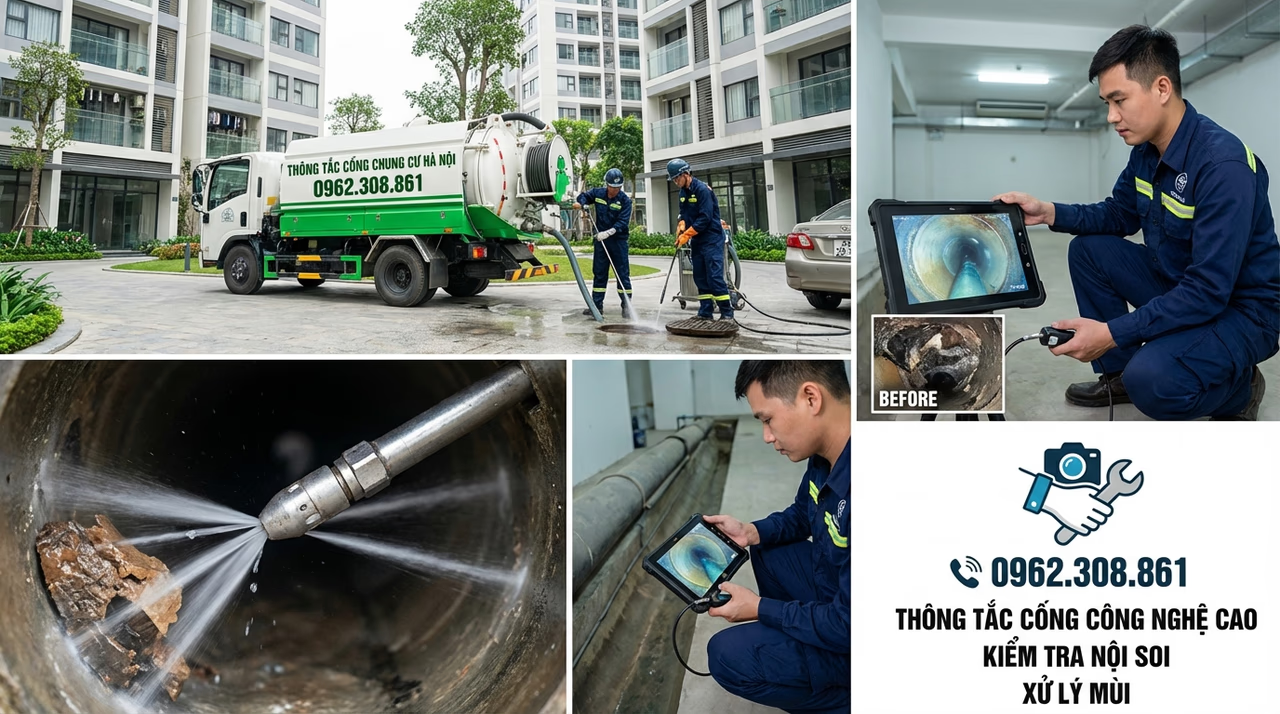
Me Tri ward (Nam Tu Liem) embodies a unique contrast: on one side stands the modern Keangnam Landmark 72 tower and JW Marriott hotel — on the other, the centuries-old Phu Do noodle-making craft village producing 60 tons of fresh rice noodles daily. This blend creates very specific environmental sanitation challenges.
Two Grease “Battlegrounds” in Me Tri
Me Tri Ha restaurant strip
Along Me Tri Ha — Do Duc Duc road, dozens of seafood restaurants, hotpot joints, and beer houses serve office workers from the My Dinh area. Each restaurant uses 20-50 liters of cooking oil daily, with most waste oil discharged directly into shared drains without grease traps. Within 6-8 months, calcified grease layers build up 3-5 cm thick inside pipes, reducing drainage capacity by 60-70%.
Phu Do noodle craft village
Phu Do village produces approximately 60 tons of fresh rice noodles every day. The process of soaking rice, grinding flour, and boiling noodles generates massive volumes of starch-laden wastewater. The village drainage system, built around 2000, was never designed for current production volumes.

Professional Grease Treatment Process
Phase 1: Camera inspection
IP68 HD cameras are inserted into pipes to determine exact location and severity of grease buildup. This distinguishes between calcified grease (requires Jetting) and solid waste blockage (requires spring machine).
Phase 2: High-pressure Jetting at 200 Bar
A 360° rotating nozzle head is threaded through the pipe. The 200 Bar water jet cuts each layer of grease off pipe walls — 5x more effective than chemical drain cleaners and completely safe for PVC and cast iron pipes.
Phase 3: Vacuum extraction and biological treatment
After Jetting, all grease residue is extracted by vacuum truck. Technicians add grease-degrading biological agents to the grease trap, maintaining drainage capacity for 3-6 months.
Grease Traps — Mandatory for Restaurants
Per Decree 80/2014/ND-CP on drainage, food service establishments are required to install grease traps before discharging into public sewers. However, in Me Tri:
- ~60% of restaurants lack grease traps or have them but don’t clean regularly
- Grease traps need cleaning every 2-4 weeks, not every 6 months as many owners assume
- Installing a 100L stainless steel grease trap costs only 3-5 million VND — far less than one emergency drain clearing (~800,000 - 2,000,000 VND)
Reference Pricing
| Service | Residential | Restaurant/Commercial |
|---|---|---|
| Basic drain clearing (spring) | 150,000 - 300,000 VND | 200,000 - 400,000 VND |
| High-pressure Jetting | 400,000 - 800,000 VND | 600,000 - 2,000,000 VND |
| Septic pumping (1-3m³) | 150,000 - 300,000/m³ | 200,000 - 350,000/m³ |
| Grease trap cleaning | — | 200,000 - 500,000/session |
FAQ
My restaurant has a grease trap, why do drains still clog? Grease traps capture 70-80% of floating grease. The remaining 20-30% emulsified grease passes through and accumulates in pipes. Combine regular trap cleaning WITH quarterly Jetting for best results.
Is Jetting worth the cost vs chemical cleaners? Chemical cleaners (NaOH) can corrode PVC pipes and only handle light blockages. 200 Bar Jetting is thorough and pipe-safe, ultimately saving money by reducing re-clogging frequency.
Learn more at Nam Tu Liem District page.