Drain & Septic Tank Unclogging — Prices From 86K, On...
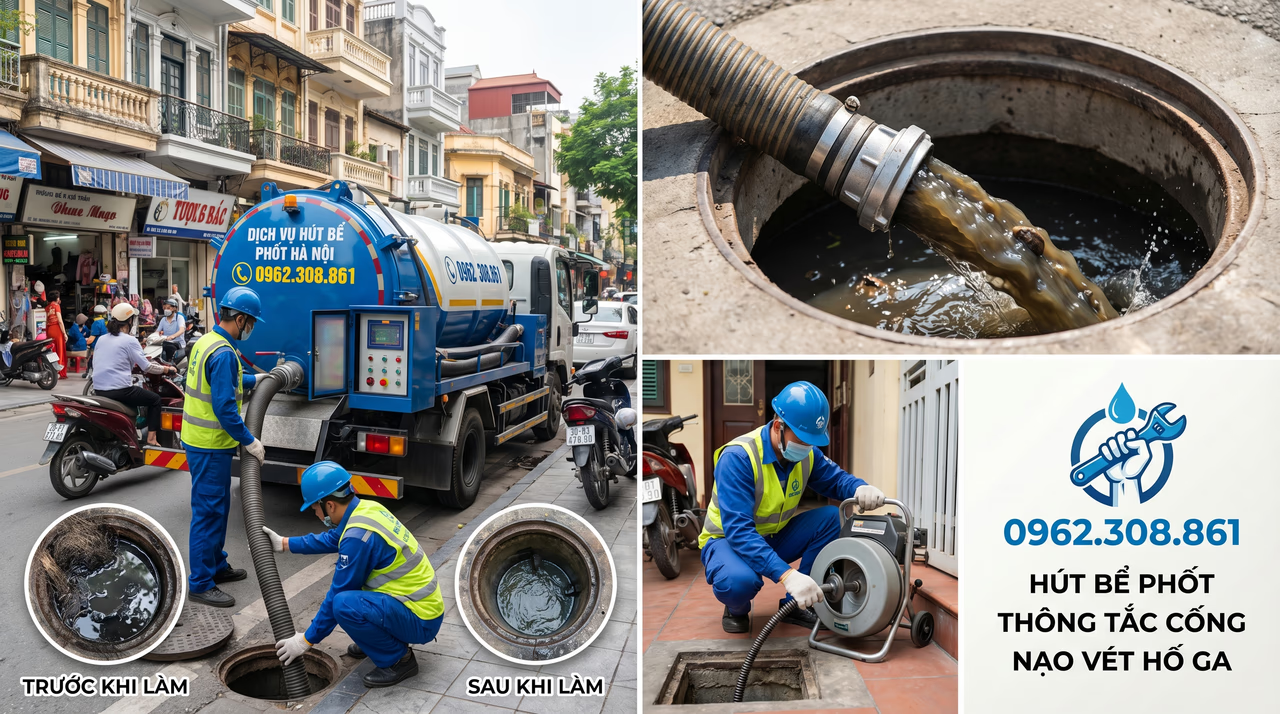
Septic tanks (self-contained tanks) are the heart of a home’s sanitation system. However, many homeowners and builders often overlook the design and construction of this essential component, leading to annoying consequences after moving in: persistent odors, slow-draining toilets, or tanks filling up quickly after just a few months.
With experience in resolving thousands of incidents, Môi Trường Xanh (Green Environment) would like to share 5 crucial technical tips for you to have a perfect and durable septic tank system that lasts up to 20 years.
1. Choosing the right tank volume for your needs
Many families build tanks that are too small (under 2 cubic meters) for a household of 5-6 people, leading to the tank quickly becoming overloaded with solid waste.
- Suggested Standard: A family of 4-5 people should build a tank with an actual capacity of 3 - 5 m3.
- 3-Chamber Septic Tank: Always design a 3-chamber tank (Inlet/Retention Chamber - Settling Chamber - Filtering Chamber) instead of 2 chambers to ensure clearer and cleaner effluent, preventing blockages in public sewage systems.
2. Crucial Technique for Inter-Chamber Pipe Placement
This is the most common mistake that causes a septic tank to “suddenly die” (stop functioning).
- Position: The connecting pipe between the inlet/retention chamber and the settling chamber must be placed at 1/3 of the tank’s height from the bottom up to ensure only diluted wastewater flows through, retaining thick sludge in the retention chamber.
- Shape: A T-shaped pipe should be used for smooth water flow, preventing disturbance of the bottom sludge layer which can cause blockages in the subsequent chamber.
3. Installing the Vent Pipe — The “Breathing Hole” of Your Home
Many homes experience toilets gurgling and emitting foul odors every time they’re flushed due to a lack of a vent pipe.
- Function: Helps release toxic gases (Methane, H2S) generated during decomposition to the outside, preventing high pressure that could cause the tank to explode or push odors back into the restroom.
- Technique: The vent pipe should have a minimum diameter of 27mm, be placed at the highest point of the tank, and extend above the roof to disperse odors.
4. Ensuring Absolute Watertightness to Prevent Pollution and Subsidence
If a septic tank leaks wastewater into the foundation, it will contaminate groundwater and pose an extremely dangerous risk of house foundation subsidence.
- Materials: It’s advisable to build with solid bricks, thick cement plaster, and thoroughly polish the inner surface. For advanced current applications, prefabricated septic tanks made of Composite plastic or precast concrete should be used to ensure toàn diện watertightness.
5. Documenting the Septic Tank Lid Location — A “Hard-Earned” Lesson
Thousands of times we’ve gone to pump septic tanks for customers in Hanoi, only to find homeowners having to… demolish their entire living room floor just to locate the tank.
- Solution: Design a small inspection/access lid (pumping hole) covered with aesthetic tiles that can be easily opened when needed. Additionally, take photos or record the septic tank’s location diagram in your family’s digital records immediately after construction.
👉 Môi Trường Xanh Engineering Team
Conclusion
Building a septic tank correctly not only helps you live in a clean environment but also saves tens of millions of VND in future maintenance costs. Do not hesitate to contact Môi Trường Xanh (Green Environment) for professional advice from leading environmental sanitation engineers.
Homeowner’s guide to read:
- Vacuum Septic Tank Pumping Service Without Breaking Floors
- Transparent All-Inclusive Septic Tank Pumping Price List 2026
- How to Use Microorganisms to Keep Septic Tanks from Filling for 10 Years
Using industrial spring machines and high-pressure jetting, we completely remove stubborn waste, grease, and long-accumulated residues from pipelines.
Terrain Analysis and Challenges in This Area
The area of Be Phot itself has a high building density, with many houses located deep in alleys, hundreds of meters from main roads. Laying septic pumping hoses through narrow residential areas presents a significant technical challenge for ordinary technicians. Recognizing these limitations, Môi Trường Xanh (Green Environment) has proactively upgraded its fleet with small-capacity vehicles (from 1.5 to 3 cubic meters) on standby 24/7 right at the Be Phot boundary. We use endoscopic cameras to penetrate deep into the sewer lines, combined with powerful dual-helix spring cables to completely dislodge sludge, grease, and waste from the core of the blockage.
Technical Solutions from Môi Trường Xanh (Green Environment)
Recognizing these specific difficulties, Môi Trường Xanh (Green Environment) has deployed a technical team equipped with the most modern machinery:
- Industrial Spring Machine: Dislodges all types of grease buildup and stubborn waste without needing to break through surfaces.
- Japanese Vacuum Tanker: Suction power 3 times stronger than conventional vehicles, guaranteeing toàn diện clean bottom sludge.
- Endoscopic Camera: Inspects pipeline condition before and after work, ensuring absolute transparency.
Why Residents Trust Our Service?
- Response Speed: 14 minutes thanks to the Đống Đa Satellite Station system.
- Specialized Equipment: 2m³ mini tanker (Navigates narrow alleys) - Suitable for the housing characteristics here.
- Long-term Warranty: Up to 5 years, free re-service if an issue occurs.
Logistics Details and Service Capacity
Based on 2026 operational data, we optimize our service process as follows:
- Access Distance: ~3.4 km.
- Deployment Station: Đống Đa Satellite Station.
- Status: On Duty (Ready).
- Dedicated Personnel: 4 on-duty technicians.
Need urgent assistance? 👉 Contact us today for the fastest support!