Septic Tank Pumping & Cleaning Services – From 86K, 15...
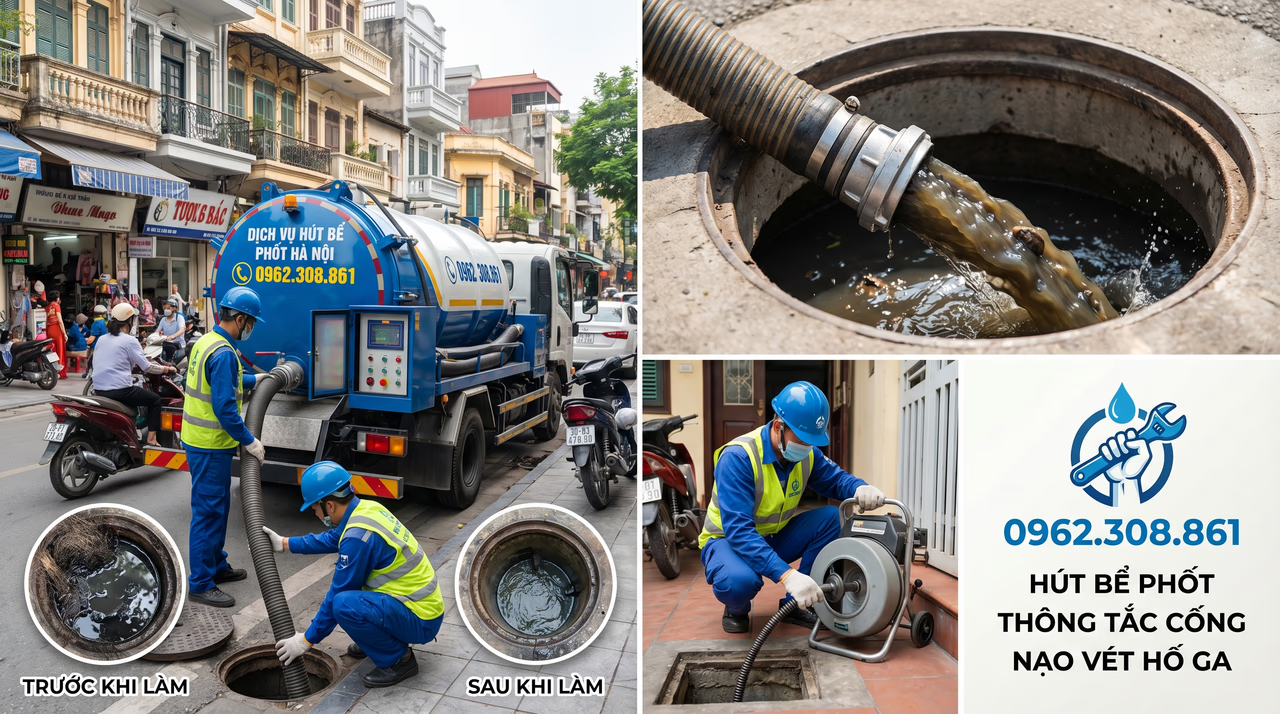
Septic Tank Pumping in Hanoi: Decoding Frequency, Warning Signs, and Comprehensive Solutions from Môi Trường Xanh
Hanoi, the millennial heart of culture, with its ancient moss-covered streets, time-worn collective living quarters, and bustling modern urban areas. Amidst this vibrant and bustling pace of life, there’s a silent yet critically important issue that directly impacts the quality of life for every family and resident: the wastewater drainage and septic tank system.
We often only pay attention to the septic tank when it ‘speaks up’ with unpleasant odors, standing wastewater, or, worse, toilet backups. At that point, the nuisance extends beyond daily routines and poses potential risks to health and environmental sanitation. Many still wonder: “How often should a septic tank be pumped?”, “Why does my tank seem full so soon after pumping?”, or “How can I avoid septic system problems?”
With years of experience serving the residents of the capital, Môi Trường Xanh understands these concerns. We don’t just provide septic tank pumping services; we also aim to be a trusted partner, offering in-depth knowledge so that every family and business in Hanoi can manage their sanitation systems effectively and sustainably. This article will delve into every aspect, from causes, warning signs, and ideal pumping frequency to comprehensive, professional solutions you can rely on.
I. How Does a Septic System Work, and Why Does it Require Regular Pumping?
To fully understand why septic tanks require regular pumping, we need to grasp their basic operational principles. A septic tank (also known as a septic system) is not merely a waste containment vessel; it’s a crucial primary treatment system. It is typically divided into three main compartments:
- Inlet/Settling Compartment: This is where wastewater from toilets and bathrooms first enters. Here, heavy solids settle to the bottom, forming sludge. Lighter materials like oils, grease, and soap suds float to the surface, forming a scum layer.
- Treatment/Digestion Compartment: After settling in the first compartment, the effluent flows into this section. Within this compartment, anaerobic microorganisms actively break down organic matter present in the wastewater and settled sludge. This process significantly reduces the volume of solids and partially treats the wastewater.
- Outlet/Discharge Compartment: After preliminary treatment in the digestion compartment, the treated effluent flows into this section and is then discharged into the public sewage system or a drain field for further absorption.
So, Why is Regular Pumping Necessary? While septic tanks possess self-digestion capabilities, not all solid waste can be completely broken down. Inorganic materials, hair, synthetic fibers, non-biodegradable items (such as plastics, condoms, sanitary napkins, coffee grounds, eggshells…), and a significant portion of difficult-to-decompose organic matter will gradually accumulate at the bottom of the settling and digestion compartments, forming a dense sludge layer. As this sludge layer thickens, the effective capacity of the tank decreases, and the decomposition efficiency diminishes. When the sludge accumulation becomes excessive, it occupies too much space, obstructs the effluent flow, and renders the septic tank unable to function effectively, leading to backups, blockages, and foul odors.
Regular septic tank pumping is precisely the process of removing this accumulated sludge and scum layer, restoring the tank’s optimal operational capacity, and ensuring your household’s sanitation system remains clear and efficient.
II. How Often Should a Septic Tank Be Pumped? Criteria and Expert Recommendations
The frequency for septic tank pumping is not a fixed figure but depends on various factors, primarily the scale and intensity of usage, the tank’s design, and household habits. Below are detailed recommendations from Môi Trường Xanh, based on practical experience in Hanoi:
1. For Households (2-5 people)
- Recommended Frequency: Every 3 to 5 years.
- Explanation: For moderate usage, the volume of domestic wastewater is not excessively large. Household septic tanks typically have a capacity of 2-4m³. If properly designed and managed with good usage habits (avoiding disposal of difficult-to-decompose waste, limiting grease), the decomposition process is efficient, making this timeframe appropriate.
- Note: For larger families (6-8 people) or those with smaller-than-standard septic tank capacities, the pumping interval may need to be shortened to 2-3 years.
2. For Rental Housing, Dormitories, and Mini-Apartment Buildings
- Recommended Frequency: Every 1.5 to 2 years.
- Explanation: The characteristic of these areas is a high user density, and collective usage awareness often varies. The disposal of difficult-to-decompose materials (sanitary napkins, diapers, cotton swabs, hair…) is more frequent. Additionally, the volume of domestic wastewater (showering, laundry, sanitation) is much greater than in single households, leading to a faster accumulation of sludge.
- Note: For older rental properties and collective living quarters, drainage systems may already be deteriorated, potentially requiring earlier inspection and pumping.
3. For Restaurants, Hotels, Eateries, and Commercial Centers
- Recommended Frequency: Every 6 months to 1.5 years (depending on scale and business type).
- Explanation: These establishments generate extremely large volumes of organic waste, particularly fats, oils, and grease (FOG). When FOG is discharged into drainage pipes, it cools, solidifies, and adheres to pipe walls, forming ‘fatbergs’ that cause severe blockages and reduce the septic tank’s decomposition efficiency. Although many facilities have grease trap systems, their effectiveness is often not toàn diện, and the grease traps themselves require regular cleaning. A high volume of customers also translates to significantly larger volumes of wastewater and solid waste.
- Note: Restaurants and eateries that prepare a lot of fried dishes or have a high customer turnover should consider a frequency of every 6-9 months.
4. For Industrial Zones, Factories, and Hospitals
- Recommended Frequency: Every 6 months to 1 year.
- Explanation: Although many industrial zones and factories have their own wastewater treatment systems, the septic tanks serving employee restrooms still require maintenance. The enormous number of users, coupled with the potential discharge of chemicals (even if not directly into the septic tank, they can affect microorganisms), leads to rapid sludge accumulation. Hospitals also generate a large volume of domestic waste and require stringent hygiene standards.
- Note: These entities often have strict waste management protocols, but regular inspection and septic tank pumping remain an indispensable part of their overall maintenance plan.
III. Septic System “Distress Signals”: Don’t Wait Until It’s Too Late
Proactively recognizing the signs of a full septic tank will help you address issues promptly, preventing more severe and costly incidents. Don’t wait until the toilet backs up or strong foul odors permeate your home before calling for professional help. Pay attention to the subtle ‘voices’ of your system:
1. Slow Draining Water, Unusual Gurgling Sounds
- Manifestation: When you flush the toilet, water drains slower than usual, or there may even be uneven swirling or a slight backup before it slowly recedes. Occasionally, you might hear unusual ‘gurgling’ sounds from the drainage pipes or toilet, especially after flushing.
- Explanation: This is the most common and easily recognizable sign. When the septic tank is full, the sludge layer occupies too much space, obstructing the free flow of wastewater into the primary compartment. Pressure within the pipes changes due to partial blockage, causing ‘gurgling’ sounds as air is pushed back up.
2. Strong, Foul Odors Emitting Backwards
- Manifestation: Even after thoroughly cleaning your restroom and using various cleaning products, you still detect strong, unpleasant odors emanating from the toilet, floor drains, or other drain openings in your home. These odors are often particularly intense in the morning or during hot weather.
- Explanation: When the septic tank is full, the anaerobic decomposition process is stalled due to overload. Unprocessed organic waste ferments and produces malodorous gases such as H2S (hydrogen sulfide), NH3 (ammonia), and CH4 (methane). These gases, unable to escape through the vent pipe (if present) or due to blockages, will reverse flow through the drainage pipes into your living space.
3. Wastewater Overflowing Around the Septic Tank Area
- Manifestation: You observe wastewater leakage or ponding on the ground around the septic tank’s location. Especially after heavy rain, water may not drain adequately and could overflow.
- Explanation: This indicates an excessively full septic tank, which may be leaking or have a completely blocked drainage system. Wastewater cannot enter the public sewage system and is either pushed back up or permeates into the surrounding environment. This situation not only causes unsanitary conditions but also poses a risk of groundwater contamination.
4. Abnormally Lush Vegetation Around the Septic Tank Area
- Manifestation: If your septic tank is located near a green area, you might notice that the grass or plants there grow unusually verdant and robust compared to other areas.
- Explanation: Wastewater from septic tanks is rich in nutrients (nitrates, phosphates). If the septic tank leaks or permeates, these nutrients will seep into the soil and act as natural ‘fertilizer’ for surrounding vegetation. This is a subtle but quite reliable indicator.
5. Elevated Nitrate Levels in Well Water (If Applicable)
- Manifestation: If your household uses well water near the septic tank and conducts regular water testing, detecting a sudden increase in Nitrate levels is a serious warning.
- Explanation: Nitrates are an end product of organic waste decomposition. High nitrate levels in well water indicate that wastewater from the septic tank has leaked and permeated into the groundwater supply, causing contamination and directly affecting the health of users. This is the most dangerous sign and requires urgent intervention.
IV. Extending Septic System Lifespan: Golden Habits and Prohibited Practices
While regular septic tank pumping is essential, you can significantly extend the time between pump-outs and minimize issues by adopting improved daily usage habits. ‘Prevention is better than cure’ is always a golden rule.
1. Absolutely Do Not Pour Excess Fats, Oils, or Grease (FOG) Down Toilets or Drains
- Why Prohibited: When FOG cools, it solidifies and adheres to pipe walls, gradually accumulating to form ‘fatbergs’ (massive, rock-hard grease masses) that cause severe pipe blockages. When it enters the septic tank, FOG forms a thick scum layer on the surface, impeding gas exchange and the activity of anaerobic bacteria, thereby reducing waste decomposition efficiency.
- Alternative Solution: Collect excess FOG in old bottles or containers, allow it to solidify, and then dispose of it in the trash. Alternatively, use oil-absorbing paper to wipe clean pans and dishes before washing.
2. Limit the Use of Strong Chemical Cleaners and Bleach
- Why Prohibited: Strong industrial cleaning chemicals, bleach (Javel water), and chlorine-based toilet bowl cleaners have potent antibacterial properties. When they enter the septic tank, they destroy a significant portion of the beneficial anaerobic microbial population, halting the waste decomposition process. This leads to faster solid waste accumulation, quicker tank filling, and foul odors.
- Alternative Solution: Opt for biologically-derived, environmentally friendly, and septic-safe cleaning products. Alternatively, use vinegar or baking soda for gentle cleaning. For toilets, only use specialized cleaners explicitly labeled as ‘septic-safe’.
3. Do Not Dispose of Hard, Non-Biodegradable Items into the Toilet
- Why Prohibited: Toilets are designed only for human waste and easily flushable toilet paper. Disposing of materials such as hair, condoms, sanitary napkins, diapers, cotton swabs, eggshells, coffee grounds, cigarette butts, wet wipes, shampoo sachets, plastic bags, etc., will cause drainage pipe blockages and non-decomposable accumulation in the septic tank.
- Alternative Solution: Place a lidded trash can in the restroom for all non-toilet paper waste. Educate family members about this habit.
4. Use Septic-Safe Toilet Paper, Conserve Water
- Solution: Choose toilet paper that dissolves quickly in water. Avoid flushing excessive amounts of paper at once. Additionally, conserving water (e.g., not flushing the toilet unnecessarily) helps reduce the load on the septic tank and drainage system.
5. Periodically Add Septic Tank Additives/Enzymes (Optional)
- Solution: Septic tank additives (anaerobic bacteria/enzymes) can help enhance waste decomposition efficiency, especially when the tank shows signs of reduced performance or after strong chemicals have been used. However, this is only a supplementary solution and does not replace regular septic tank pumping.
V. Unique Aspects of Hanoi’s Drainage Infrastructure – Challenges and Solutions
Hanoi, with its long history of development, possesses an extremely diverse and complex drainage infrastructure system, featuring many unique characteristics not found elsewhere. This creates particular challenges in the management and maintenance of septic tanks and sewers.
1. Outdated and Inconsistent Sewer System
- Characteristic: Many inner-city areas, especially districts like Hoan Kiem, Ba Dinh, Dong Da, Hai Ba Trung, still have sewer lines constructed during the French colonial period or in the 1960s-1970s. These lines often have small cross-sections, deteriorated materials, many sections are sunken, broken, or not uniformly connected to newer systems.
- Challenge: Old sewers are prone to blockages due to accumulated silt, dirt, and waste. Small pipe diameters cannot cope with the increasing wastewater flow of a modern city. Repair and upgrade efforts are difficult due to their underground location, intertwined with residential structures.
- Môi Trường Xanh’s Solution: We utilize specialized unclogging equipment and sewer cameras to accurately assess the condition of old pipelines, proposing appropriate solutions that avoid further damage to the aging infrastructure.
2. High Population Density, Dense Housing, Narrow Alleys
- Characteristic: Hanoi has one of the highest population densities in the country. Many residential areas, particularly the Old Quarter, old collective housing blocks, are densely packed, interspersed with deep and narrow alleys and lanes, some barely wide enough for a pedestrian.
- Challenge: Accessing septic tanks for pumping becomes extremely difficult. Specialized septic pumping trucks (often large vehicles) cannot navigate deep into these alleys. This necessitates extending suction hoses over very long distances, posing risks to suction pressure and overall work efficiency.
- Môi Trường Xanh’s Solution: We possess a diverse fleet of vehicles varying in load capacity and size, from large specialized trucks to flexible mini-pumping vehicles. Crucially, we employ an ultra-long, high-capacity vacuum suction hose system, combined with modern vacuum technology, allowing us to pump septic tanks from dozens of meters away while ensuring optimal efficiency, without excavation or disruption to residents’ daily lives.
3. Mixed Stormwater and Wastewater Drainage Systems
- Characteristic: In Hanoi, there is a coexistence of combined drainage systems (stormwater and domestic wastewater flowing into a single sewer) and separate drainage systems (segregating stormwater and wastewater). However, many areas still exhibit unauthorized connections or have not been fully separated.
- Challenge: During heavy rainfall, stormwater floods the combined sewer system, overloading it, causing localized flooding, and pushing wastewater from sewers back up through floor drains, and even into toilets. This also affects the treatment efficiency of centralized wastewater treatment plants.
- Môi Trường Xanh’s Solution: We don’t just address localized septic tank issues; we also advise customers on how to optimize their in-house drainage systems, preventing incorrect connections that impact the overall system. For flooding situations caused by combined sewers, we offer professional drain clearing services for swift resolution.
4. Impact of Rainy and Stormy Seasons
- Characteristic: Hanoi experiences a prolonged rainy season with frequent heavy rainfall, leading to localized flooding in many streets.
- Challenge: Heavy rain increases pressure on the drainage system, making full septic tanks more prone to backflow. Septic tank pumping operations during stormy weather also face numerous difficulties.
- Môi Trường Xanh’s Solution: We maintain a 24/7 on-call team, ready to assist customers in all weather conditions. We recommend that customers inspect and pump their septic tanks before the rainy and stormy season to prevent unforeseen incidents.
VI. Real-Life Case Study: The “Odor Nightmare” at an Old Pho Restaurant on Hang Bong Street
Background: Mr. Ba’s traditional pho restaurant on Hang Bong Street, one of Hanoi’s busiest Old Quarter streets, is renowned for its rich flavor and nostalgic ambiance. The restaurant has been in business for over 30 years, serving hundreds of customers daily. Its sanitation system includes a small customer restroom and a dishwashing area in the kitchen, both connected to a shared septic tank, estimated to be around 4-5m³ and built a long time ago.
Problem: For about 3 months, Mr. Ba’s pho restaurant began experiencing an ‘odor nightmare.’ A strong, foul smell emanated from the restroom, spreading to the dining area and causing discomfort to customers. Wastewater from the kitchen also drained very slowly, sometimes even backing up onto the floor. Mr. Ba had tried everything, from pouring drain cleaner chemicals to constantly scrubbing the toilet, but to no avail. The persistent odor severely impacted his business. He worried the restaurant would lose customers.
Môi Trường Xanh’s Analysis: Upon receiving Mr. Ba’s request, Môi Trường Xanh’s technical team promptly arrived for an on-site assessment.
- Location and Specifics: The pho restaurant is situated in a narrow alley on Hang Bong Street, inaccessible to large vehicles. The septic tank is buried deep underground and had not been pumped for a long time.
- Primary Causes:
- Massive FOG Accumulation: As a pho restaurant, large quantities of broth, dishwashing water containing fats, oils, and grease (FOG) are discharged daily. The restaurant’s old grease trap system was no longer effective. This FOG had solidified, forming a thick scum layer on the septic tank’s surface and adhering to the pipes, causing severe blockages and hindering the decomposition process.
- Overloaded Usage: With a high volume of customers and continuous operation, the septic tank was overloaded, leading to sludge accumulation much faster than a typical household septic tank.
- Chemical Usage: Mr. Ba’s repeated use of drain cleaning chemicals had destroyed beneficial bacteria within the septic tank, completely halting the decomposition process and quickly leading to foul odors due to untreated organic matter.
Môi Trường Xanh’s Solution:
- In-depth Survey: Utilized sewer cameras to accurately assess the extent of blockages in the pipes and the fill level of the septic tank. Identified the tank’s location and drainage pipeline.
- Deployment of Specialized Equipment: Due to the narrow alley, we deployed a highly maneuverable mini-septic pumping truck combined with a high-capacity, ultra-long vacuum suction hose system to access the septic tank from the alley entrance, avoiding excavation or disruption to the restaurant’s structure.
- Sludge and Grease Scum Removal: Proceeded with pumping out all accumulated sludge, solid waste, and particularly the stubborn FOG layer from the septic tank. We employed high-pressure spray nozzles to break down hardened grease deposits within the pipes and tank walls, ensuring thorough cleaning.
- Drainage Pipe Unclogging: After septic tank pumping, we used a high-power sectional drain cleaner to completely clear the drainage pipes from the kitchen and restroom, thoroughly removing all grease clogs and waste causing blockages.
- Consultation and Guidance: Advised Mr. Ba on the recommended frequency for commercial septic tank pumping (approximately every 6-9 months), proper disposal of excess FOG before it enters drains, and recommended periodic use of septic tank additives to maintain efficient tank operation.
Results: After more than 3 hours of professional work, Mr. Ba’s pho restaurant’s septic tank was completely cleaned. The foul odors vanished, and wastewater from the kitchen and restroom drained quickly and freely. Mr. Ba was extremely satisfied and relieved, and his pho restaurant was bustling with customers once again. Môi Trường Xanh also committed to a 5-year service warranty, providing him with complete peace of mind.
VII. Detailed Septic Tank Pumping Price List at Môi Trường Xanh (Updated 2024)
Môi Trường Xanh is committed to providing septic tank pumping services with the most transparent, competitive, and reasonable prices in Hanoi. We quote based on the actual volume pumped, the type of vehicle used, and the complexity of the job (e.g., deep alleys, hard-to-locate septic tanks). The prices below are indicative and may vary depending on the time, specific location, and any additional requirements. For the most accurate quote, please contact us directly for a free on-site survey.
1. Septic Tank Pumping Price List by Volume (Applicable for households, small offices)
| Volume (m³) | Estimated Price (VNĐ) | Notes |
|---|---|---|
| 1 - 3 m³ | 300,000 - 500,000 | Mini pumping truck, suitable for narrow alleys |
| 4 - 6 m³ | 500,000 - 800,000 | Specialized pumping truck 3-5 m³ |
| 7 - 10 m³ | 800,000 - 1,200,000 | Specialized pumping truck 7-10 m³ |
| Over 10 m³ | Contact for detailed pricing | Volume discount available |
Note:
- The prices above are indicative for standard, easily accessible septic tanks.
- Prices may be higher if the septic tank is in a difficult location (deep alley, requiring hose extension >30m), requires excavation (if the tank lid is sealed), or if the waste is excessively dense with many hard objects, complicating the pumping process.
- We commit to pumping the correct and sufficient volume, and providing transparent pricing before commencing work.
2. Septic Tank Pumping Price List by Vehicle Type (Applicable for large projects, industrial zones, restaurants)
| Vehicle Type (Capacity) | Estimated Price (VNĐ) | Characteristics |
|---|---|---|
| Mini Pumping Truck (1-2 m³) | 400,000 - 600,000 | Suitable for narrow lanes, deep alleys, small volumes |
| 3 m³ Pumping Truck | 600,000 - 900,000 | Common for households, offices |
| 5 m³ Pumping Truck | 900,000 - 1,300,000 | Suitable for restaurants, medium-sized apartment buildings |
| 7 m³ Pumping Truck | 1,200,000 - 1,800,000 | Suitable for hotels, small factories |
| 10 m³ Pumping Truck | 1,800,000 - 2,500,000 | Suitable for industrial zones, commercial centers |
| 15-20 m³ Pumping Truck | Contact | Large-scale projects, volume discounts available |
Note:
- Prices by vehicle apply when customers request a full vehicle pump-out package or when the estimated waste volume is equivalent to the vehicle’s capacity.
- We